
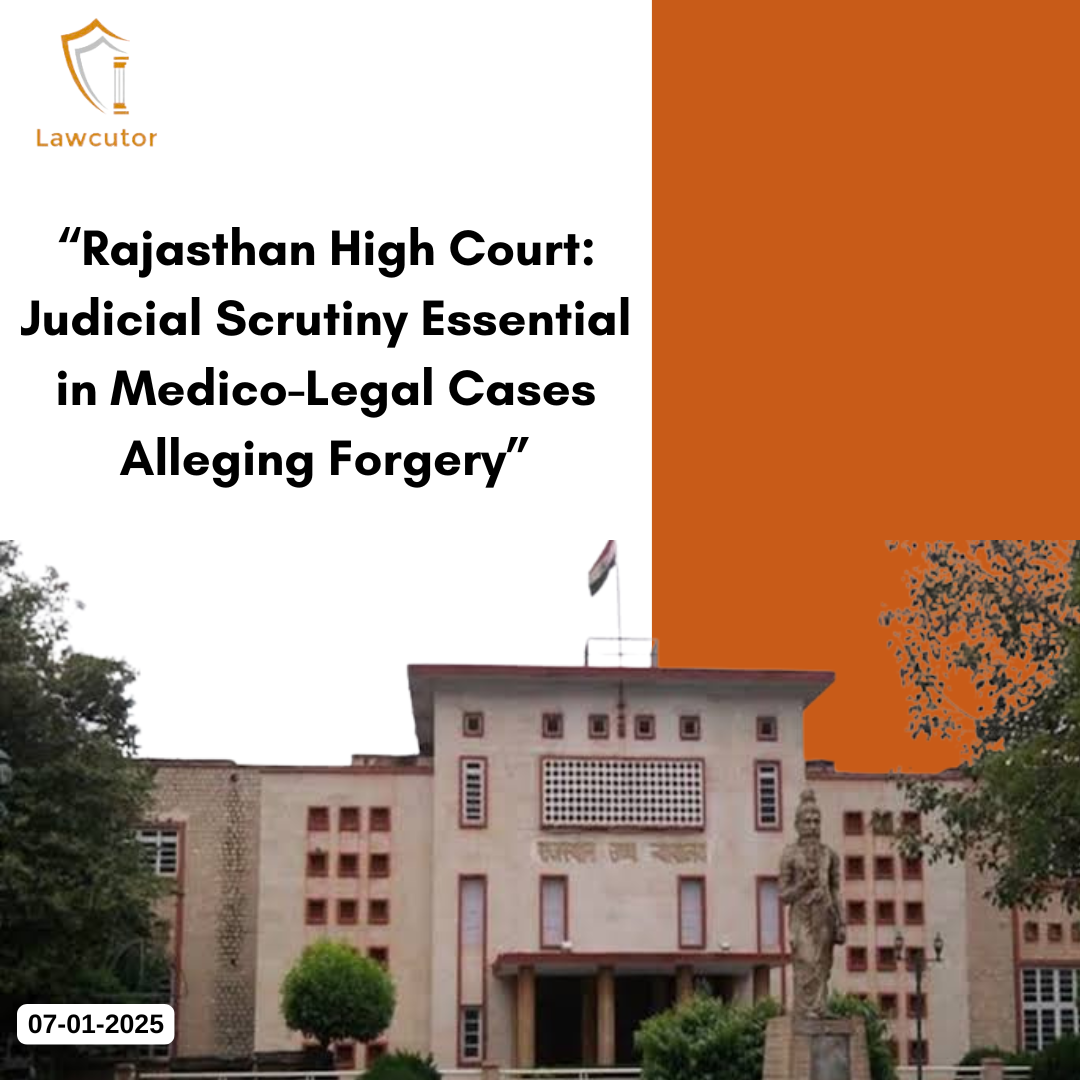
The Jodhpur bench of the Rajasthan High Court has emphasized that allegations of forgery in pathological reports involving doctors or hospital administrations demand meticulous judicial scrutiny before taking cognizance, especially when the doctor has not refuted the authenticity of the signatures.
Avoiding Premature Presumptions under Section 114, Indian Evidence Act
Justice Farjand Ali highlighted the risks of invoking presumptions under Section 114 in medico-legal matters, as such presumptions could undermine fairness and due process. The Court held that unless clear, scientific, and admissible evidence is presented, general presumptions should not be applied, especially in cases involving public trust in healthcare systems.
Facts of the Case
The case stemmed from a complaint alleging forgery and cheating by four doctors of Escorts Goyal Heart Centre, Jodhpur. The complainant accused the hospital of generating false pathological reports to fabricate bills and provide flawed medical treatment that led to the death of a patient.
Pathological Reports and Scientific Reliability
The Court observed that pathological reports, being products of advanced diagnostic tools and professional oversight, cannot be dismissed solely on allegations of signature discrepancies. The individual responsible for verifying the reports had not contested the signatures, further reducing the credibility of the forgery claims.
Forgery and the Ingredients of IPC Provisions
The Court clarified that under Section 464 IPC, the existence of a “false document” is a prerequisite for forgery. In this case, there was no evidence of fraudulent intent or dishonesty on the part of the accused. Without such evidence, the allegations remained speculative and unsubstantiated.
Higher Scrutiny in Medico-Legal Cases
Acknowledging the reputational and public trust stakes in medico-legal cases, the Court ruled that complaints against healthcare professionals require a higher degree of scrutiny. Allegations stemming from resentment or dissatisfaction due to medical outcomes must be carefully examined before proceeding.
Decision
The Court held that the trial court’s cognizance was based on presumptions rather than credible evidence. Consequently, the cognizance order was set aside, and the petitioners were exonerated.
Case Title: Dr. Ashok Kumar v. State of Rajasthan & Others
 Lawcutor