
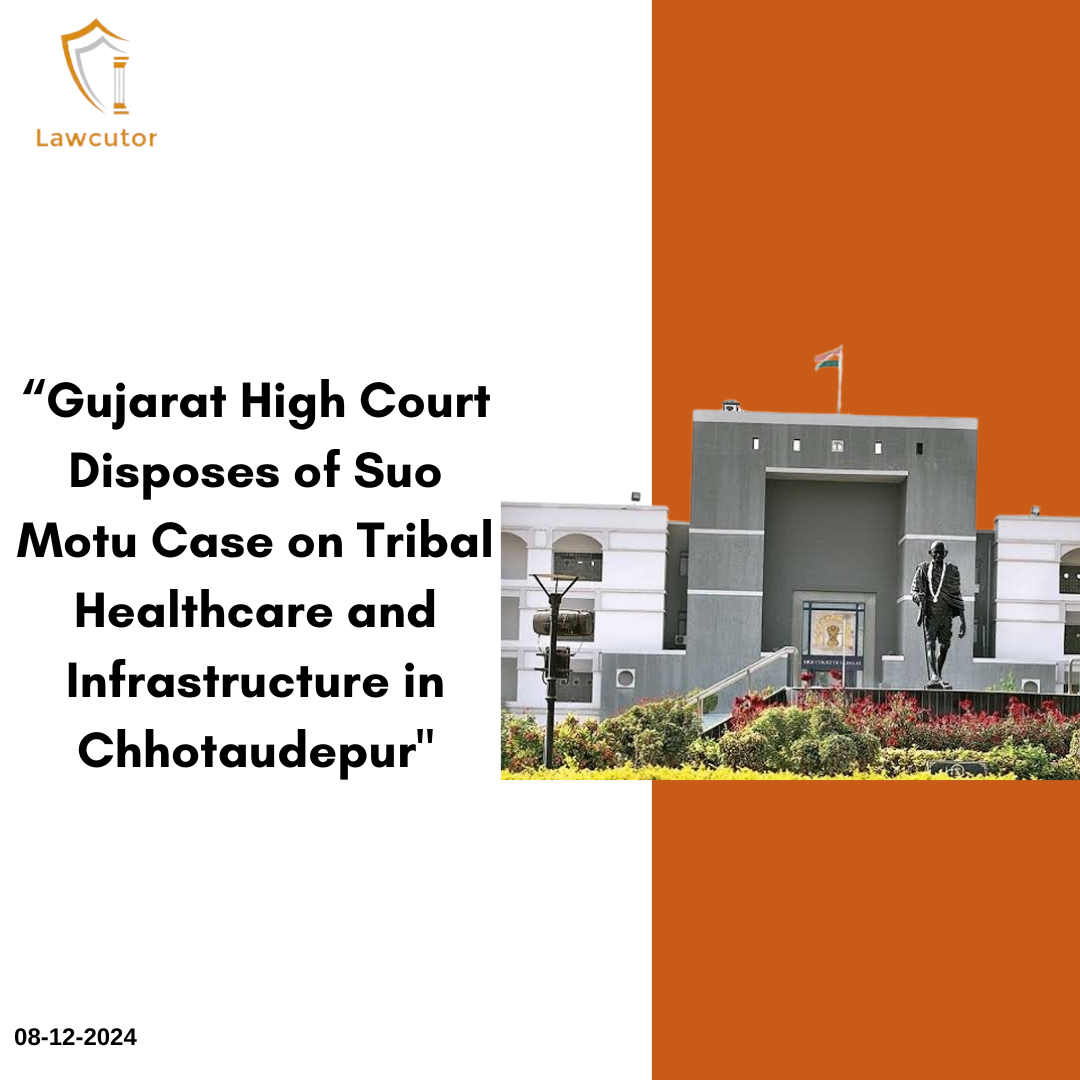
In a significant development, the Gujarat High Court, while hearing a suo motu petition regarding inadequate healthcare and infrastructure in tribal regions of Chhotaudepur, took note of steps initiated by the state government to address the prevailing issues. This case originated from an October incident where a pregnant woman tragically died on her way to an ambulance after being carried on a cloth stretcher due to the lack of proper roads.
The bench comprising Chief Justice Sunita Agarwal and Justice Pranav Trivedi was apprised of the state’s efforts to improve healthcare accessibility and road connectivity in remote tribal areas. Advocate General Kamal Trivedi, representing the state, submitted a comprehensive affidavit detailing infrastructural developments and healthcare initiatives aimed at tribal communities.
Government Initiatives Highlighted in Court
- Road Connectivity:
The state has commenced the construction of all-weather motorable roads in remote areas wherever feasible. In Chhotaudepur alone, 2,486 kilometers of roads have been built, including 1,605 kilometers of village roads. Steps are being taken to provide access for ambulances in difficult terrains. - Upgraded Ambulance Services:
The administration has proposed converting four-wheel-drive vehicles like Boleros into ambulances to navigate remote areas effectively. Once procured via the GeM portal, these vehicles are expected to significantly enhance healthcare access. Additionally, portable stretchers are being supplied for carrying patients to ambulance pick-up points. - Mobile Medical Units (MMUs):
Gujarat currently operates 132 MMUs equipped with doctors and medical supplies, visiting tribal regions to provide primary healthcare and preventive care like vaccinations. - Healthcare Infrastructure:
The tribal districts of Gujarat house 2,778 sub-centers, 421 primary health centers, five district hospitals, 27 sub-district hospitals, and 84 community health centers. These centers cater to maternal and child healthcare and minor medical emergencies, with some upgraded to address specific tribal needs. - Awareness Programs:
The district administration is organizing regular community meetings to educate villagers on healthcare services and ensure effective utilization of resources like the 108 emergency ambulance service.
Tribal Area Sub-Plan (TASP) Impact
The court was informed about the implementation of the Tribal Area Sub-Plan (TASP), which allocates funds proportionate to the tribal population. This initiative ensures financial resources are directed toward improving healthcare, education, housing, and infrastructure in tribal districts. The TASP funds, managed by the Tribal Development Department, are non-divertible, guaranteeing their exclusive use for tribal welfare.
Court’s Observations and Directions
After reviewing the submissions, the court commended the state’s efforts and disposed of the petition. It observed that the initiatives and projects outlined must continue to be implemented and improved. The bench stated:
“The progress made in the matter at the instance of the district administration, Chhotaudepur, reflects a positive step toward resolving healthcare and connectivity issues in tribal areas. Benevolent projects shall continue to operate and be enhanced over time.”
The High Court acknowledged the holistic approach adopted by the state government, combining mobile health services, infrastructure development, and community outreach programs to uplift tribal regions.
Case Details
Case Title: Suo Moto vs State of Gujarat Through Chief Secretary & Ors.
Court: Gujarat High Court
Bench: Chief Justice Sunita Agarwal and Justice Pranav Trivedi
Date of Judgment: December 6, 2024
 Lawcutor