
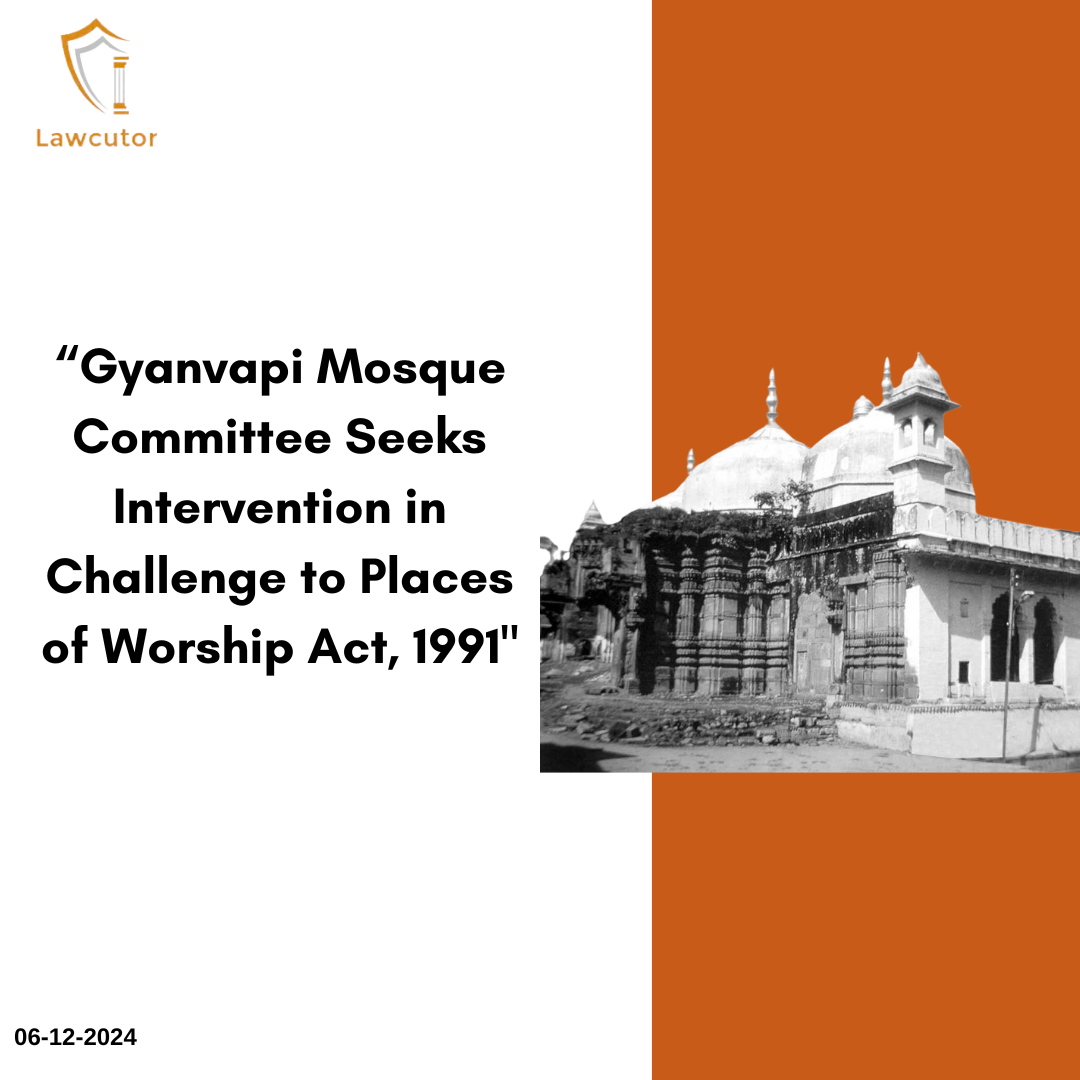
The Managing Committee of the Gyanvapi Mosque, Anjuman Intezemia Masajid, has filed an intervention application in the Supreme Court in response to petitions challenging the constitutional validity of the Places of Worship Act, 1991. The committee emphasized the potentially “drastic consequences” of the relief sought by the petitioners and underlined the Act’s importance in maintaining secular harmony in India.
Context of the Case
The Places of Worship Act, 1991, aims to preserve the status quo of religious structures as they existed on August 15, 1947, barring legal proceedings to alter their character. It also prohibits the conversion of one place of worship into another. The challenge to the Act stems from allegations that it violates fundamental rights and the right to remedy under Articles 14, 25, and 26 of the Indian Constitution.
The lead petition, Ashwini Kumar Upadhyay v. Union of India, was filed in 2020, with the Supreme Court issuing notice to the Union Government in March 2021. Since then, multiple petitions have joined the challenge.
Key Contentions of the Mosque Committee
The Gyanvapi Mosque Committee argued that it is a key stakeholder because of numerous suits filed against the mosque under alleged misinterpretations of the Act. Approximately 20 civil suits in the Varanasi District Court aim to nullify the mosque’s protection under the Act and seek its removal.
The committee referred to several instances, including ex parte interim orders permitting surveys like the Archaeological Survey of India’s inspection of Gyanvapi Mosque. These actions, according to the committee, violate the intent and scope of the Act and risk aggravating communal tensions, as seen in the recent violence in Sambhal over the Shahi Jama Masjid survey.
Reliance on Supreme Court Precedent
The committee cited the Supreme Court’s observations in the Ayodhya Case (M. Siddiq v. Mahant Suresh Das), where the Court upheld the constitutionality of the Act as a legislative measure to safeguard secularism. The judgment underscored the principle of “non-retrogression,” holding that the Act enforces India’s constitutional commitment to religious equality and harmony.
The committee highlighted that non-retrogression is a constitutional doctrine prohibiting actions that regress established secular and fundamental values. It argued that invalidating the Act could lead to widespread communal unrest, undermine secularism, and obliterate the rule of law.
Concerns Over Communal Harmony
The committee expressed grave concerns about the potential for increased communal disharmony if the Act were invalidated. It cited the Sambhal violence, which erupted following a court-ordered survey of the Shahi Jama Masjid, resulting in the loss of several lives. The intervention underscored that such disputes could proliferate nationwide, destabilizing social harmony.
Case Proceedings
The intervention application, filed through Advocate-on-Record Fuzail Ahmad Ayyubi, seeks to protect the mosque from misinterpretations of the Act and safeguard the broader constitutional principles of secularism. The case, Ashwini Kumar Upadhyay v. Union of India (WP(C) No. 1246/2020), remains under consideration by the Supreme Court.
 Lawcutor