
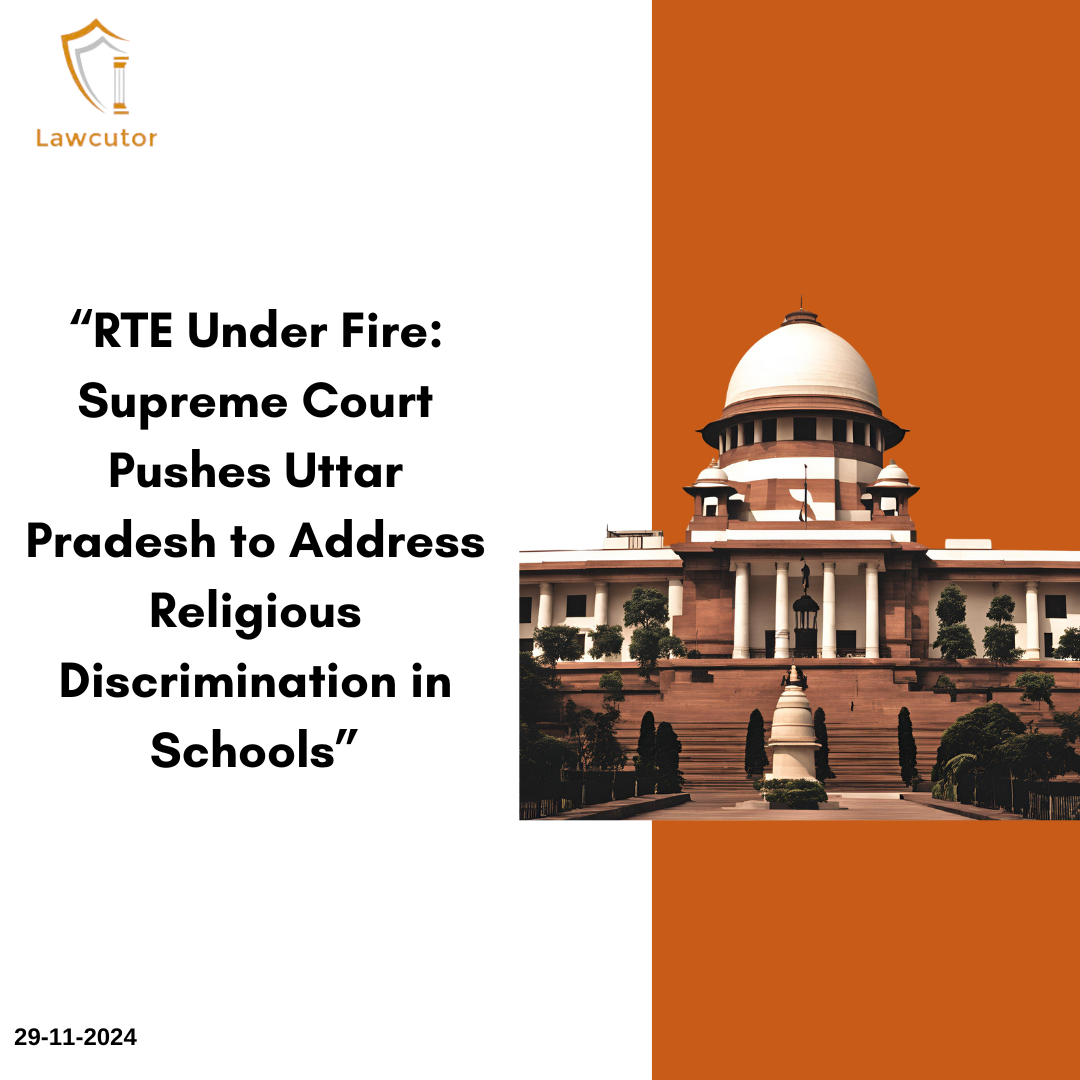
On November 28, 2024, the Supreme Court of India heard a petition filed by activist Tushar Gandhi, highlighting the ongoing issues of religious discrimination and the violation of the Right to Education Act (RTE) in Uttar Pradesh. The case revolves around a viral incident in August 2023 where a teacher, Tripta Tyagi, allegedly instructed students to slap a seven-year-old Muslim boy and made derogatory comments about his religion, which sparked public outrage and concerns regarding religious intolerance in schools.
Senior Advocate Shadan Farasat, appearing for the petitioner, raised three major issues during the hearing. First, he pointed to the failure in the full implementation of Section 12(1)(c) of the Right to Education Act, which mandates that private unaided non-minority schools allocate at least 25% of entry-level seats for children from disadvantaged sections of society. This, according to Farasat, was not being effectively implemented in Uttar Pradesh. Second, he emphasized the issue of religious discrimination in schools, citing the Muzaffarnagar case as a glaring example of how children face abuse based on their religion. Farasat noted that Rule 5 of the Uttar Pradesh RTE Rules, 2011, which is meant to protect children from caste, class, religious, and gender abuse in schools, was not being acknowledged by authorities. He stressed that for any corrective measures to be effective, the problem first had to be acknowledged by the state authorities.
Another significant issue highlighted by Farasat was the failure to apply provisions under the Juvenile Justice (Care and Protection of Children) Act. He pointed out that the chargesheet filed in the case did not invoke the second proviso to Section 75 of the Act, which mandates punishment for cruelty to children. He also brought up the issue of the child’s father not receiving his travel reimbursement of Rs. 200 per day, which had been due since July 2024, despite the child continuing to attend school successfully.
The bench, consisting of Justice Abhay Oka and Justice Augustine George Masih, took note of these concerns and criticized the lack of effective implementation of the law. They directed the Additional Advocate General of Uttar Pradesh, Garima Prashad, to appear at the next hearing and ensure that the travel reimbursements were released to the child’s father before the next hearing. Justice Oka also noted the failure to address these issues in the previous judicial proceedings and called for swift action.
The Supreme Court adjourned the matter to December 12, 2024, and directed that the relevant affidavit filed by the father of the child regarding the non-payment of reimbursement be reviewed. The Court ordered that the Uttar Pradesh authorities ensure the payment is made promptly.
The PIL, initially filed in 2023, stems from the incident involving the teacher’s physical punishment and religious discrimination against the child. The case is part of the ongoing monitoring by the Court of the state’s compliance with the RTE and related provisions aimed at protecting children from abuse and discrimination.
The Court’s decision comes after months of delays and previous hearings where the state government’s response to facilitating the child’s education and addressing the discrimination allegations was met with criticism. The state had initially opposed the child’s admission to a private school under the Central Board of Secondary Education, citing issues like distance and socioeconomic differences. However, the Court had directed the admission to be facilitated and additional support for the child’s educational needs, including counseling from institutions like the Tata Institute of Social Sciences.
Case Details:
Case Title: Tushar Gandhi v. State of Uttar Pradesh
Case No.: WP (Crl.) No. 406/2023
 Lawcutor