
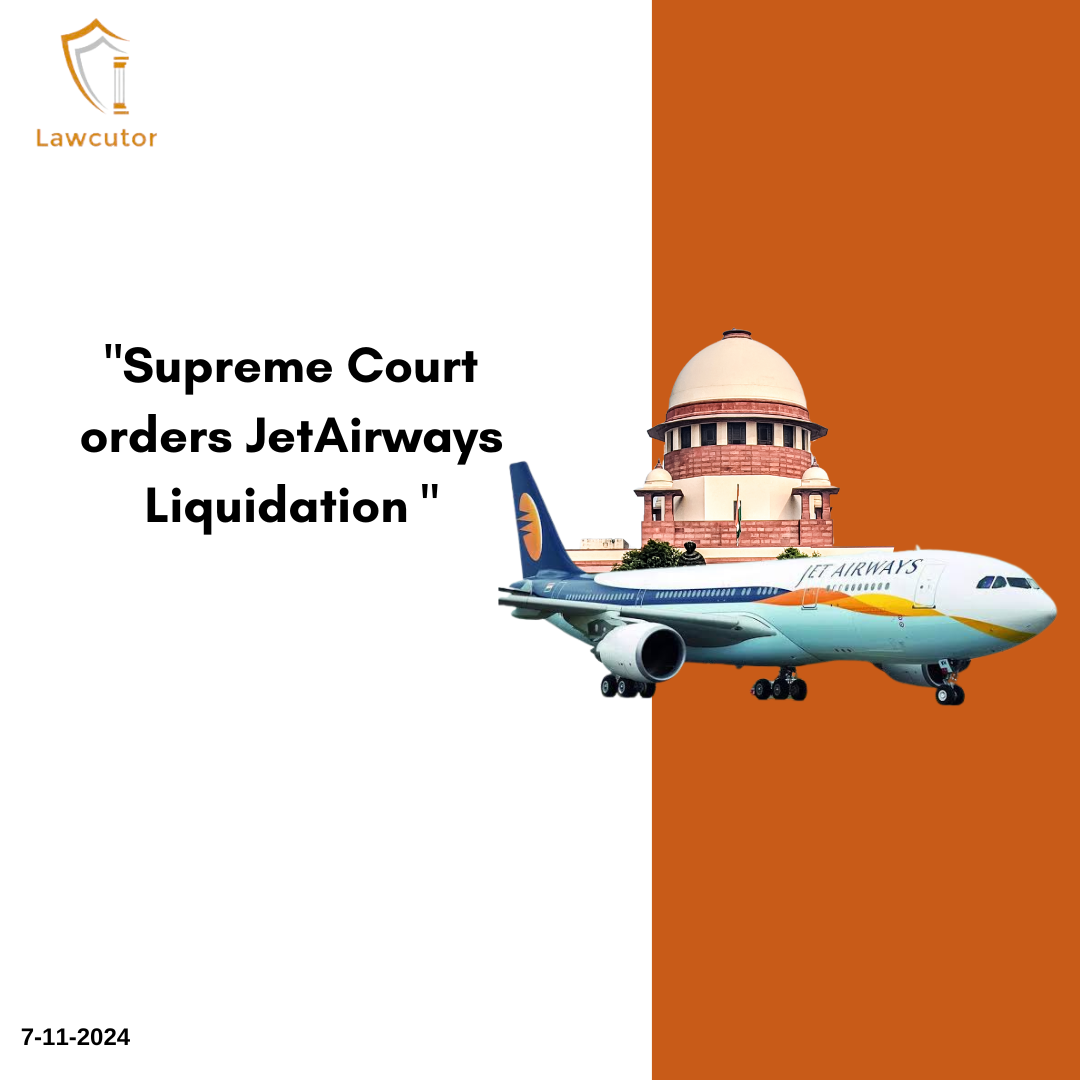
The Supreme Court, exercising its powers under Article 142 of the Constitution, ordered the liquidation of Jet Airways due to the “peculiar and alarming” situation where the airline’s resolution plan remained unimplemented for five years. This decision overturned the NCLAT’s ruling, which had allowed the transfer of ownership to the Successful Resolution Applicant (SRA) without full payment as stipulated by the resolution plan.
The Court directed the NCLT Mumbai Bench to appoint a liquidator immediately and forfeited the Rs 200 crore paid by the SRA. The ruling was made by a bench comprising CJI DY Chandrachud, Justice JB Pardiwala, and Justice Manoj Misra, who had reserved judgment on October 16. The NCLAT’s decision was challenged by the lenders, led by the State Bank of India (SBI).
Key Legal Findings:
The Supreme Court criticized the NCLAT’s order allowing the adjustment of Rs 350 crore (the first tranche) against the Performance Bank Guarantee (PBG), calling it “flagrant disregard” of its previous ruling from January 18. The Court emphasized that the PBG must remain intact until the full resolution plan is implemented, and that the SRA had failed to make the required payments.
.The Court found that the SRA’s claim to adjust the payment against the PBG was legally incorrect and rejected it. Since the resolution plan could not be implemented, the Court upheld liquidation as the only viable option for the creditors.
Background of the Dispute:
The dispute centered around the NCLAT’s decision to allow the SRA to take ownership of Jet Airways without fully paying the agreed Rs 350 crore in the first tranche, part of a larger Rs 4,783 crore resolution plan. The Supreme Court had previously set aside an NCLAT decision from August 2023 that allowed the SRA to adjust the first tranche against the PBG.
The Court had directed the SRA to deposit Rs 150 crore with the SBI by January 31, 2023, and ordered that the PBG of Rs 150 crore remain in effect until the resolution process was concluded. However, the SRA failed to comply, leading to the Court’s decision to order liquidation.
Arguments:
.SBI (Lenders’ Arguments): The lenders, represented by ASG N. Venkataraman, argued that the NCLAT’s order violated the Supreme Court’s earlier directive and was contrary to the resolution plan, which required upfront payments and the creation of securities before any adjustment of the PBG. They pointed out that the SRA had failed to pay the first tranche of Rs 350 crore, with only Rs 200 crore paid so far. Additionally, workmen’s dues of Rs 289 crore remained unpaid, and the lenders were losing Rs 22 crore monthly to maintain operations.
JKC (SRA’s Arguments): The SRA, represented by Senior Advocates Mukul Rohatgi and Gopal Sankaranarayanan, argued against the liquidation, asserting that the January 18 Supreme Court order should be viewed in its entirety. They also raised concerns about the potential loss of the Rs 200 crore already paid, questioning whether they would recover their investment in the event of liquidation.
Conclusion:
The Supreme Court emphasized the need to uphold the integrity of the resolution process and ensure that liquidation remains an option when the resolution plan cannot be implemented. It rejected the NCLAT’s order and directed the liquidation of Jet Airways, recognizing the broader concern of securing fair treatment for creditors and ensuring justice is delivered expeditiously.
 Lawcutor