
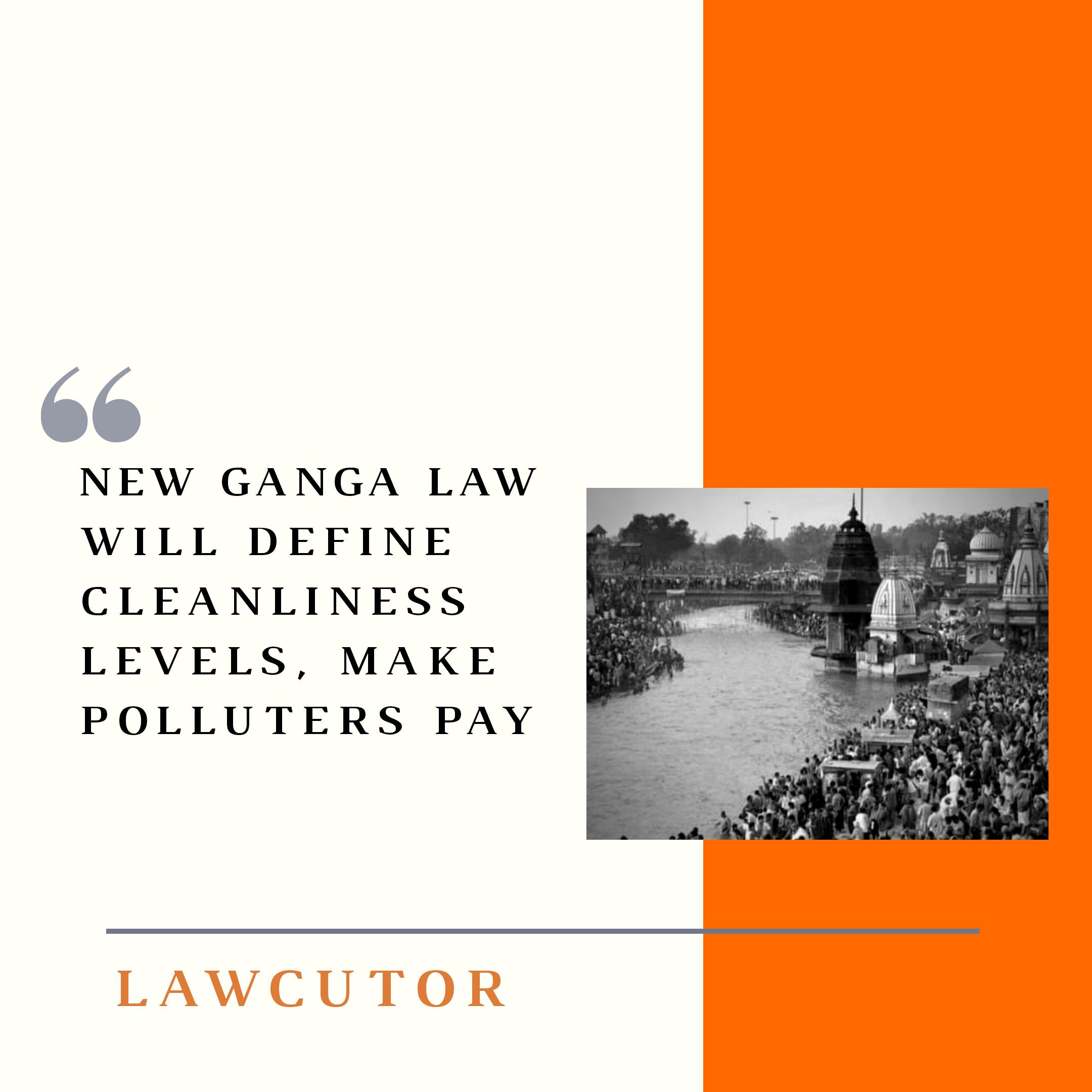

The Union government plans to bring a new legislation to keep the Ganga, Hinduism’s holiest river, clean and pollution-free. A draft of the proposed law is currently being vetted by multiple authorities before it will be sent for the Cabinet’s approval, people familiar with the matter said.
Millions of Hindus worship the 1,560-mile (2510 km) river. The Ganga basin supports over 400 million of India’s 1.3 billion people.
Efforts to rid the river of pollutants go back to 1980s, marked by two successive programmes known as Ganga Action Plans.
The government started the Namami Gange campaign to clean the Ganga, one of the world’s most polluted rivers with sewage and industrial waste discharged into it for decades.
The proposed law now being drafted will set down legal obligations to prevent pollution, fix biological and effluent parameters to be maintained at all times at key geographical points and cities through which the river flows, an official said.
The proposed law will also have a ‘polluters-pay’ approach, which means illegal factories will be shut down — many have already been closed– and permitted ones will be required to treat their sewage. Certain types of polluting factories will be banned from discharging any sewage into the river.
The Namami Gange project aims to ensure that no untreated municipal sewage or industrial runoff enters the river.
 Lawcutor